


Post Workout Wonders DIY Recovery Recipes for Body and Skin

Jul 30
7 min read
Good for you! - You are exercising and working out!
Exercise is one of the best habits for supporting a healthy lifestyle. It helps build strength, supports heart health, improves mobility, and can lift mood. It also benefits the skin in simple, visible ways. When you move, your circulation increases, delivering oxygen and nutrients through the body while helping carry away waste products. That fresh post-workout glow is real, even if it comes with sweat and a need for a shower.
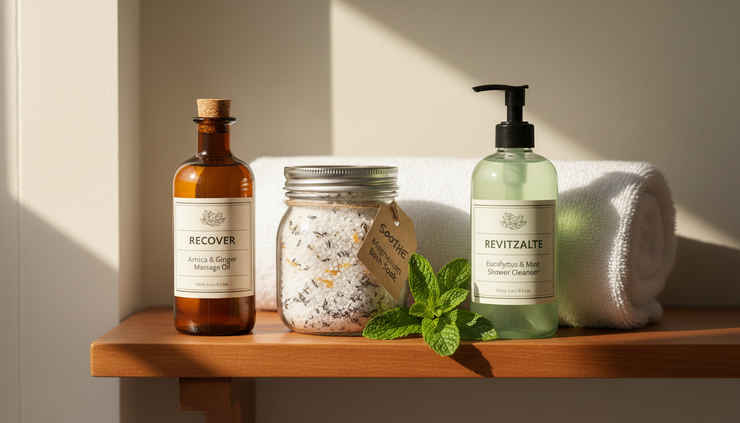
I have noticed that post workout products are trending and there a number of sprays, soaks, and massage oils on the market featuring well known body soothers such as eucalyptus, lavender, Epsom, salt and baking soda. They are also easy to make at home with these same natural ingredients that you may already have or can easily find at most grocery or natural food stores.
Exercise supports both body strength and skin health
Exercise is often linked with muscle tone, endurance, and weight management, but its benefits go much wider. Regular movement supports cardiovascular health, balance, flexibility, and energy. It can also help regulate stress, which matters because stress often shows up in posture, sleep, digestion, and skin.
For the skin, circulation is a key part of the story. During exercise, blood flow increases to working muscles and skin. This helps deliver oxygen and nutrients throughout the body. Sweating also plays a role in temperature control. While sweat itself does not “detox” the skin in a dramatic way, washing up after exercise helps remove salt, oil, and impurities from the surface.
Workout effect | What it can mean for the body | What it can mean for the skin |
Increased circulation | Warmer muscles and better oxygen delivery | A temporary healthy-looking glow |
Sweating | Helps regulate body temperature | Needs gentle cleansing afterward |
Better stress response | Supports mood and sleep quality | May help reduce stress-related dullness |
Improved mobility | Supports daily movement and posture | Encourages a more active lifestyle overall |
The key is balance. Move your body, then care for it. Push when it is time to train, then give yourself permission to recover.

A few safety basics before you mix
DIY body care is fun, but skin safety matters. Essential oils are concentrated plant extracts. A little goes a long way, and more is not better.
Keep these guidelines in mind:
Always dilute essential oils in a carrier oil, unscented soap base, or another skin-safe base.
Patch test each finished product on a small area of skin and wait 24 hours.
Avoid using essential oils near the eyes, broken skin, or irritated skin.
Label jars and bottles with the ingredients and date.
Use clean tools, clean containers, and dry hands when scooping products.
Stop using any product that causes burning, itching, rash, or discomfort.
For post-workout use, gentle is best. Your skin may be warm, flushed, and more reactive right after exercise, so give it formulas that soothe rather than overwhelm.
Soothing lavender, eucalyptus, and ginger massage oil
This massage oil is made for tired legs, shoulders, calves, and arms after exercise. Lavender gives the blend a calm, herbal scent. Eucalyptus feels fresh and spa-like. Ginger adds warmth and depth.
Use this oil after a shower, or after you have cooled down and stretched. It is especially nice on calves after a long walk, thighs after strength training, or shoulders after a tense day at the gym.
Ingredients
Makes about 2 ounces.
2 tablespoons sweet almond oil
1 tablespoon jojoba oil
1 tablespoon fractionated coconut oil
6 drops lavender essential oil
3 drops eucalyptus essential oil
2 drops ginger essential oil
Optional
1 vitamin E capsule, pierced and squeezed into the oil
Tools
2-ounce glass bottle with pump or dropper
Small funnel
Measuring spoons
Label
How to make it
Add the sweet almond oil, jojoba oil, and fractionated coconut oil to the glass bottle.
Add the lavender, eucalyptus, and ginger essential oils.
Add vitamin E if using.
Cap the bottle and roll it gently between your palms for 30 seconds.
Label the bottle with the name and date.
How to use it
Pour a small amount into your palm and rub your hands together. Massage into clean skin using slow strokes toward the heart. For calves, start near the ankle and work upward. For shoulders, use gentle circles and avoid pressing too hard.
Use for 5 to 10 minutes. The goal is not deep tissue therapy. It is calm, steady contact that helps you relax and reconnect with your body.
Why these ingredients work well together
Lavender is a classic choice for relaxation and skin comfort. Its soft scent makes the blend feel calming without being heavy.
Eucalyptus adds a fresh, cooling aroma that feels especially good after sweat and heat.
Ginger brings a warm, spicy note. In a low dilution, it gives the blend a cozy finish without overpowering the skin.
Store in a cool, dark place and use within 3 to 4 months.

Relaxing salt, baking soda, and Epsom salt bath soak
A warm bath can feel like a reset button after a demanding workout. This soak combines sea salt or kosher salt, baking soda, and Epsom salts for a simple mineral-style bath blend.
Epsom salt is a common bath ingredient made of magnesium sulfate. Many people enjoy it for post-workout soaking, though it should not be treated as a cure for soreness or injury. Think of this recipe as a relaxing comfort ritual.
Ingredients
Makes about 3 cups.
1 1/2 cups Epsom salts
1 cup fine sea salt or kosher salt
1/2 cup baking soda
Optional
1 tablespoon dried lavender buds
Optional
6 drops lavender essential oil, mixed first into 1 tablespoon carrier oil
Tools
Large mixing bowl
Spoon
Airtight glass jar
Label
How to make it
Add Epsom salts, sea salt, and baking soda to the bowl.
Stir until the mixture looks even.
If using dried lavender, rub it lightly between your fingers, then stir it in.
If using essential oil, blend it with 1 tablespoon carrier oil first. Drizzle it over the salt mixture and stir very well.
Transfer to a clean, dry jar.
Label with the ingredients and date.
How to use it
Add 1/2 cup to 1 cup of the soak to warm bathwater. Swirl the water to help dissolve the salts. Soak for 15 to 20 minutes, then rinse off if your skin feels salty.
Drink water before or after your bath, especially if you worked up a serious sweat. Keep the water warm, not hot. Very hot baths can leave you lightheaded, especially after intense exercise.
When to skip a bath soak
Skip this soak if you have open cuts, irritated skin, a fresh sunburn, or a skin condition that salt may aggravate. If you feel dizzy, overheated, or unusually fatigued after exercise, cool down and hydrate first.
Invigorating mint and cinnamon shower gel
This shower gel is for the days when you want to feel clean, awake, and refreshed. Mint gives it a crisp scent, while cinnamon adds warmth. Since cinnamon essential oil can irritate skin easily, this recipe uses a very small amount and keeps the overall blend gentle.
For the safest option, use cinnamon hydrosol or a cinnamon-infused glycerin instead of cinnamon essential oil. If you do use essential oil, choose cinnamon leaf rather than cinnamon bark, and keep it minimal.
Ingredients
Makes about 8 ounces.
3/4 cup unscented liquid castile soap or unscented shower gel base
2 tablespoons vegetable glycerin
1 tablespoon aloe vera gel
8 drops peppermint or spearmint essential oil
1 drop cinnamon leaf essential oil
Optional safer swap
1 teaspoon cinnamon hydrosol instead of cinnamon essential oil
Optional
1/2 teaspoon jojoba oil for a softer feel
Tools
8-ounce squeeze bottle or pump bottle
Small funnel
Measuring spoons
Label
How to make it
Pour the castile soap or shower gel base into the bottle.
Add vegetable glycerin and aloe vera gel.
Add mint essential oil.
Add either 1 drop of cinnamon leaf essential oil or cinnamon hydrosol.
Add jojoba oil if using.
Cap the bottle and turn it slowly upside down several times. Do not shake hard, or it may foam.
Label with the name and date.
How to use it
Use a small amount on wet skin, avoiding the face and sensitive areas. Rinse well. This gel is best for the body, especially after sweaty workouts when you want a clean, fresh finish.
Because mint can feel cooling and cinnamon can feel warming, patch test this recipe before using it in the shower. If your skin is sensitive, reduce the mint oil by half and skip the cinnamon essential oil.
Why this blend feels so refreshing
Mint has a crisp aroma that can make a shower feel energizing. It pairs well with the clean lather of castile soap or an unscented gel base.
Cinnamon adds warmth and a subtle spicy note. Used with care, it makes the scent feel cozy rather than sharp.
Glycerin helps draw water to the skin’s surface, while aloe gives the formula a smoother feel. Together, they help keep the shower gel from feeling too stripping.

Build a simple post-workout ritual
You do not need to use all three recipes after every workout. Match the product to the type of movement and how you feel.
After strength training, try the massage oil on the muscles you worked most. Use slow pressure and give yourself a few quiet minutes.
After a long run, hike, or cycling session, a bath soak may feel better. Let your body cool down first, drink water, then soak.
After a hot yoga class, gym session, or outdoor workout, use the mint and cinnamon shower gel for a clean, refreshed feeling.
A balanced recovery routine can look like this:
Cool down with easy movement.
Drink water.
Shower or bathe.
Use massage oil if your muscles feel tight.
Eat a nourishing meal or snack.
Rest.
The DIY products add comfort, but the basics still matter most. Sleep, hydration, nutritious food, and regular movement are the foundation.
Keep your homemade products fresh
Small batches are best. DIY products do not always contain preservatives, so they need a little care.
For oil blends, keep water out of the bottle and store away from heat and sunlight. For bath soaks, use a dry spoon instead of wet hands. For shower gel, make one bottle at a time and use it within a few weeks, especially if you added aloe vera gel.
Watch for changes in smell, texture, or color. If something smells off, separates strangely, grows anything, or irritates your skin, throw it away.
Labeling helps more than you might think. Add the product name, date made, and key ingredients. That way, if your skin loves or dislikes something, you can track it.

Comments